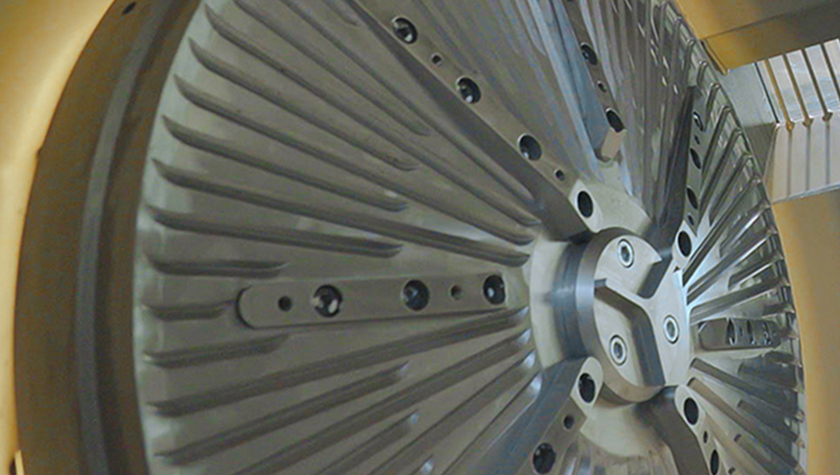
The Challenge: Complexity in Reprocessing Recycled Plastics
In many recycling operations, complexity accumulates across the line. Flakes with low bulk density require special silos, unstable conveying solutions, additional drying stages, and careful handling, each step adding cost, energy consumption, and operational risk. This is particularly true for recycled PET and lightweight formats such as stretch films, foams, fines, and powders.
For decision‑makers, the implication is clear: every additional intermediate step increases CAPEX, OPEX, and process variability. In a market where margins are tight and quality expectations are rising, simplification is no longer optional, it is a competitive necessity.
Agglomeration as a Strategic Lever
Agglomeration systems have long been recognized for their ability to convert low‑bulk‑density regrind into free‑flowing material suitable for extrusion or injection molding. What has changed is how much value can be created within this single step.
Modern plastcompactors eliminate the need for classic downstream processes by combining:
- Agglomeration, producing agglomerates with high bulk density
- Drying, reducing residual moisture during processing
- Partial crystallization, especially relevant for recycled PET
The result is a material that flows reliably, conveys easily, and can be processed directly in extruders, preform injection molding machines, or film lines with gravimetric dosing, without special storage silos.
 Coperion
Open navigation
Coperion
Open navigation